
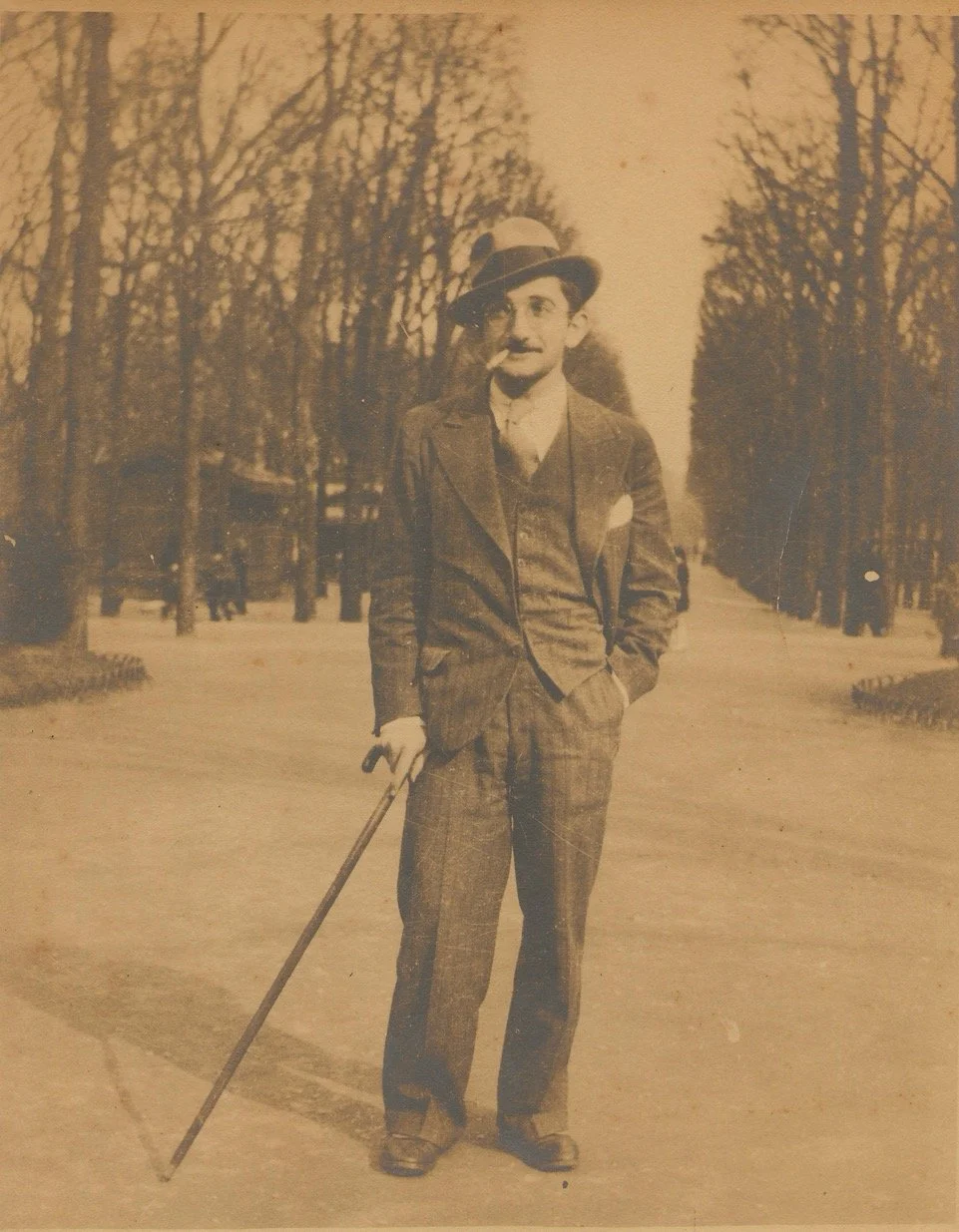
Jack Ornstein
September 2026
MEET THE ORIGINAL BOULEVARDIERS
Jean-Frédéric Pouvatchy’s route to Ménilmontant can shift with the mood of the day. From the 18th arrondissement, he might pass through Belleville, follow the edge of Buttes-Chaumont, or continue down Rue Saint-Maur, Rue Jean-Pierre Timbaud, or Rue Oberkampf. It is a stretch of Paris still marked by workers’ history, neighborhood bistros, small trades, artists, craftspeople, and the kind of social mixture that has not yet been entirely polished into scenery.
That walk seems to explain something about the way he works. Jean-Frédéric is attentive to the city not as a postcard, but as a living surface: layered, practical, political, beautiful, and always in the process of being made. In his workshop, that attention becomes paper, ink, pressure, and form. One day, it might mean helping print material for a protest. Another, working with artists whose images deserve a physical life. Another still, indulging a rather niche cocktail publication in its desire to recreate the texture and charm of old letterpress.
Below, Jean-Frédéric reflects generously on why certain things still matter when they are made carefully, by hand, with feeling, and in conversation with the people they are meant to reach.
THE FAMILY PORTRAIT
If you had to describe them to someone who had never met them, what kind of person were they?
Jack Ornstein was a kind, gracious, and welcoming person, with a warm smile (and often a twinkle in his eye) and subtle sense of humor. He was a very creative artist, a gifted writer, and exceptionally articulate individual. He was also an extraordinary camp director (in his younger years, according to his peers), a very talented art teacher, and an outstanding school principal. He made friends easily, had many long-lasting friendships, and was often called upon—by former students, young colleagues, etc.—for help and counseling. And he was especially devoted to his family—his wife, children, daughter-in-law, and grandchildren.
THE PARIS YEARS
What do you know about their time in Paris? Where did they live, work, spend time, or find their community?
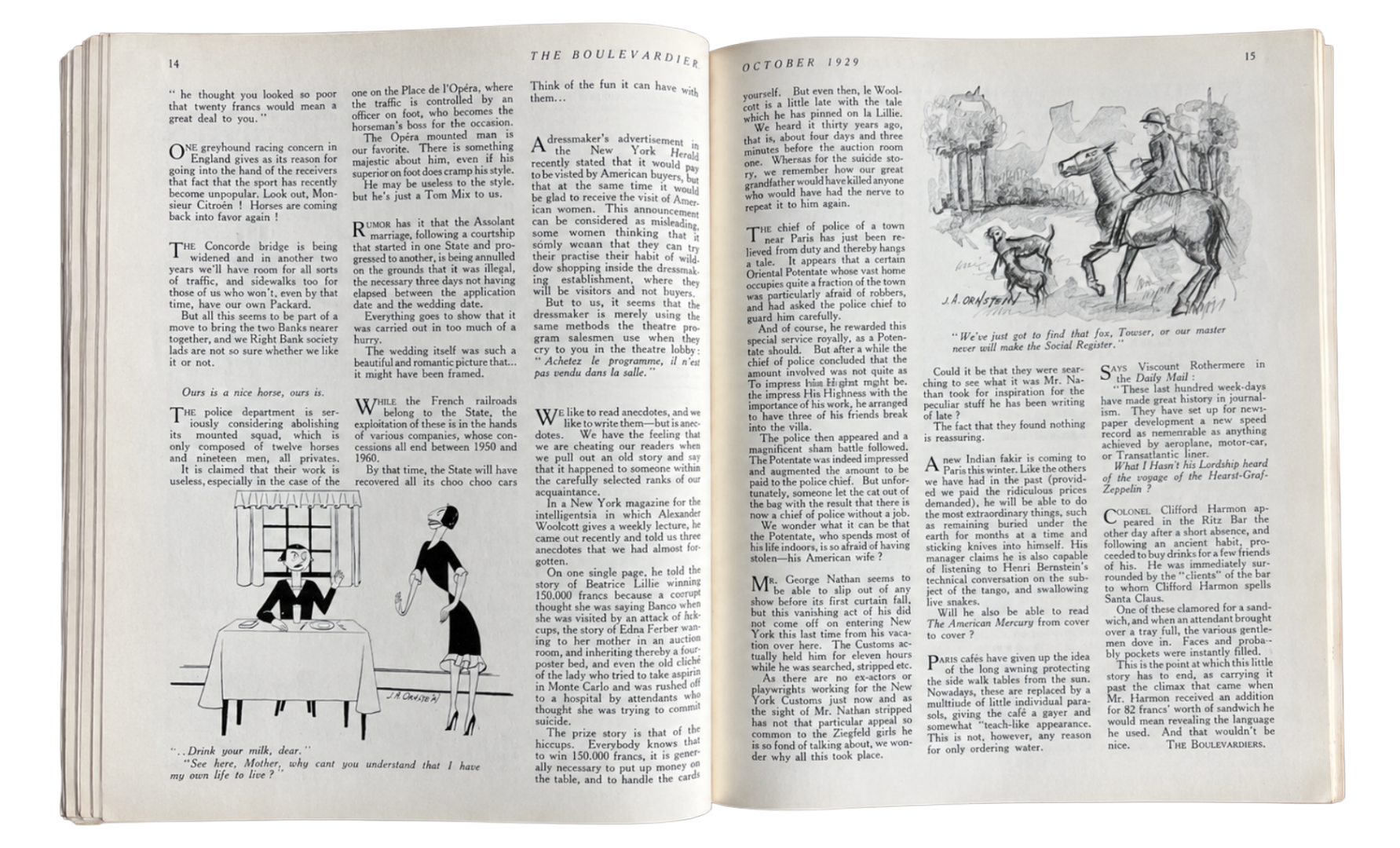
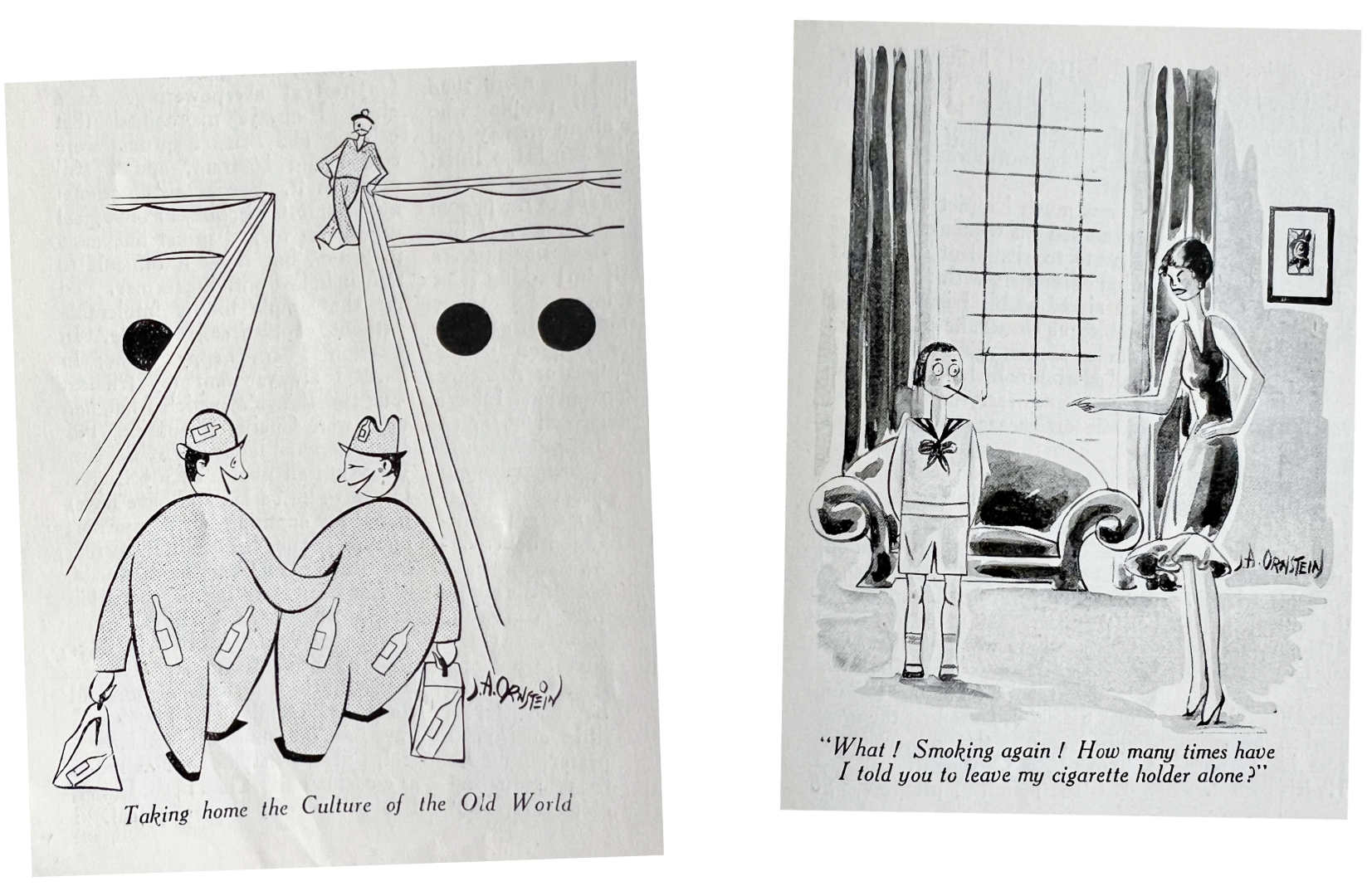
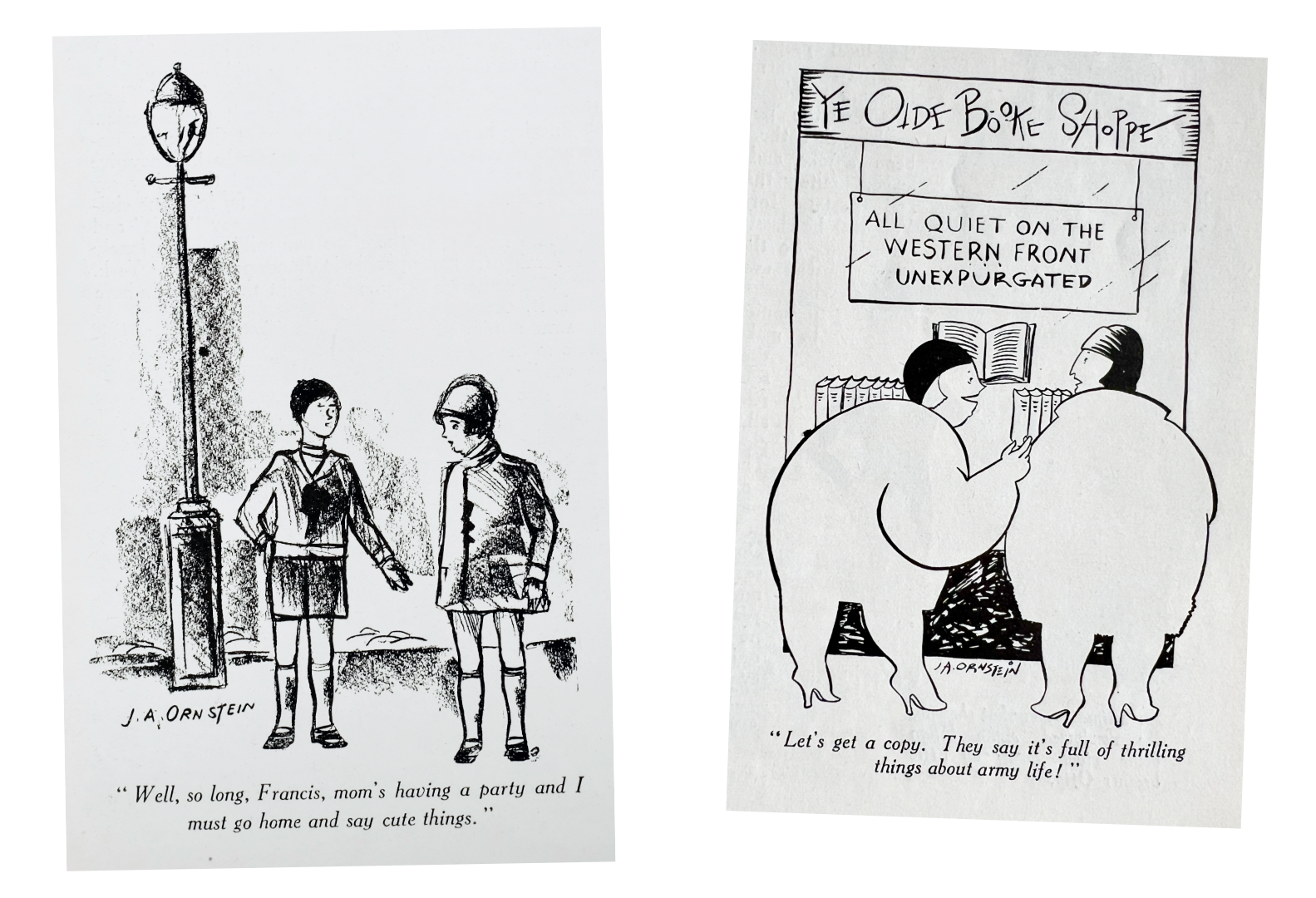
He lived at the Hotel Brea, 14 rue Brea, close to the Luxembourg Gardens (now the Hotel Jardin le Brea) and took classes at the Paris branch of the New York School of Fine and Applied Art (Parsons). I believe that he also took classes at the Academie Colarossi. We know that he published drawings/cartoons in the Boulevardier and the London Looker-On. In terms of community, a friend and fellow-student at Parsons—Lawrence Lariar—was his roommate at the Brea. (And I know that the time in Paris—and at the Hotel Brea—was important to him, because many family members and former art students of his made the “pilgrimage” to 14 rue Brea to take a photo or draw a picture of it!). I know that there were others, but I don’t know who they were, although I’d bet that Adolph Shus was one of them.
THE CREATIVE LIFE
What did making art or writing mean to them? Are there particular subjects, styles, places, or ideas they returned to again and again?
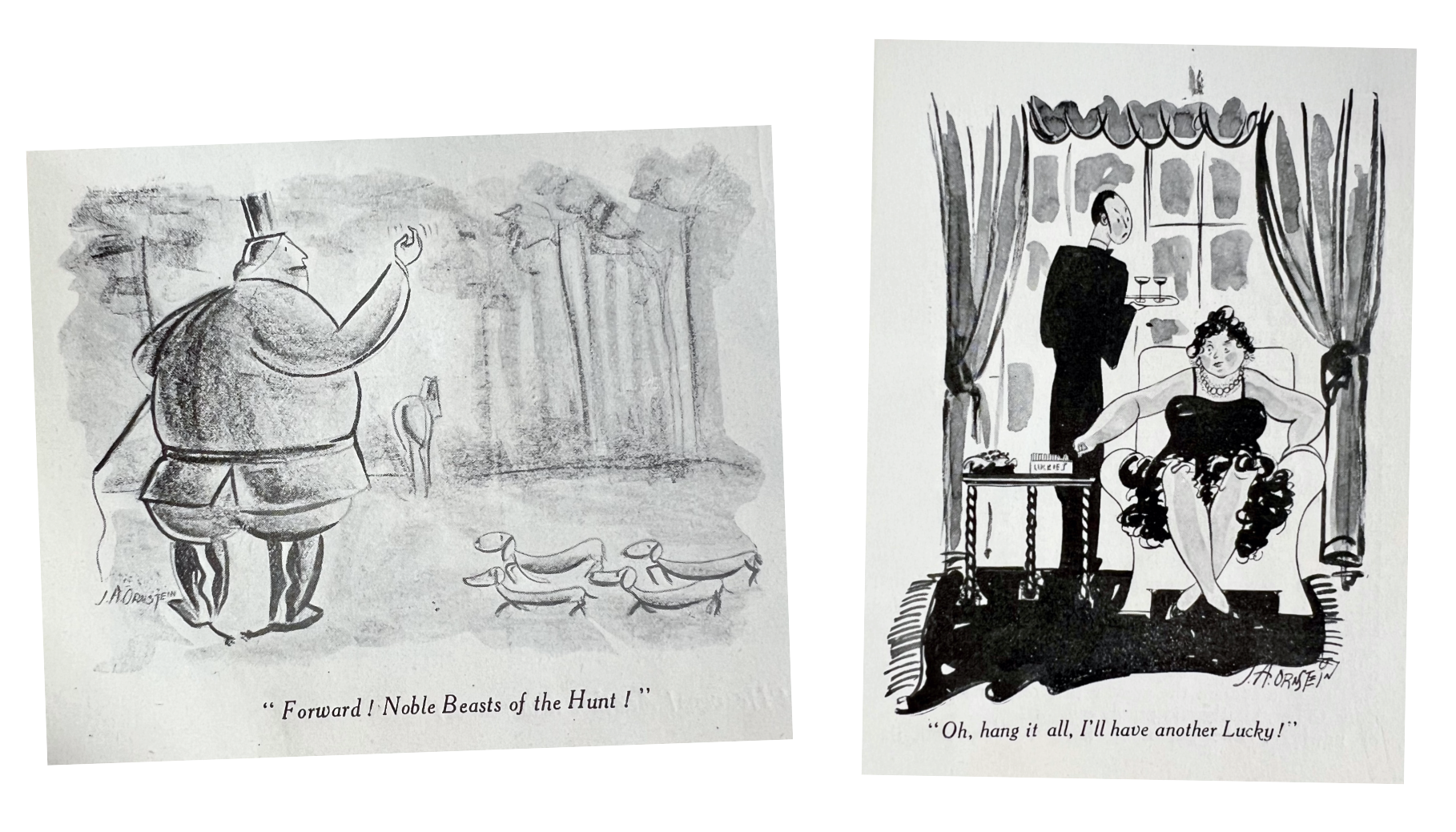
Art was at the core of his being. In fact, I’m told that the joke in the family was that my father was so devoted to his art that he wouldn’t marry and have a family. That all changed when he met my mother and married at age 33! In terms of subjects and styles, my father’s talent was such that he could draw and paint in many different styles. At the center of his work was a very strong sense of line. He would say that he was influenced by Chinese and Japanese calligraphy and drawing, and by the Cubists and by artists such as Klee, Dufy, and Miro. He worked in many different media—watercolors (representational landscapes and seascapes that became semi-abstract over the years; oils and acrylics (abstracts and geometrically focused pieces); pen (and brush) and ink (drawings of a variety of sources. He often included figures and faces (often his own) in pieces.
BEYOND THE BYLINE
What do you know about their life outside of their work? What occupied their days when they were not drawing, painting, writing, or creating?
When he returned from Paris, he had a decision to make. He had had a fair amount of experience in cartooning and commercial art, and I think that he did a bit more commercial work when he got home. However, he didn’t want to continue in that vein. Rather, he wanted to do fine art, but it was very hard to earn a living as a fine artist during the Depression. At the same time, he was very active in the Boy Scouts—as a scout leader, summer-time camp director, etc.—and because he was good at working with youngsters, he decided to go into high school art teaching. I believe that this was around 1936. And teaching led to its own parallel track in art education and later school administration.
So, in a sense, he was leading two parallel lives—one in the world of education and one in the world of his own development as an artist. He maintained his own evolving program of original art and exhibited and sold some of what he produced. But he merged these two lines from time to time—by writing, editing, and illustrating magazines for teachers and administrators in the New York City public schools. Along the way, he also published three books (Lettering for Fun, 1939; Paintbrush fun for Home Decoration, 1944; Decorating Unpainted Furniture, 1946) and completed Master’s and Doctoral degrees in art education.
THE LITTLE THINGS
Are there any habits, rituals, expressions, clothes, objects, foods, or small eccentricities that family members still associate with them?
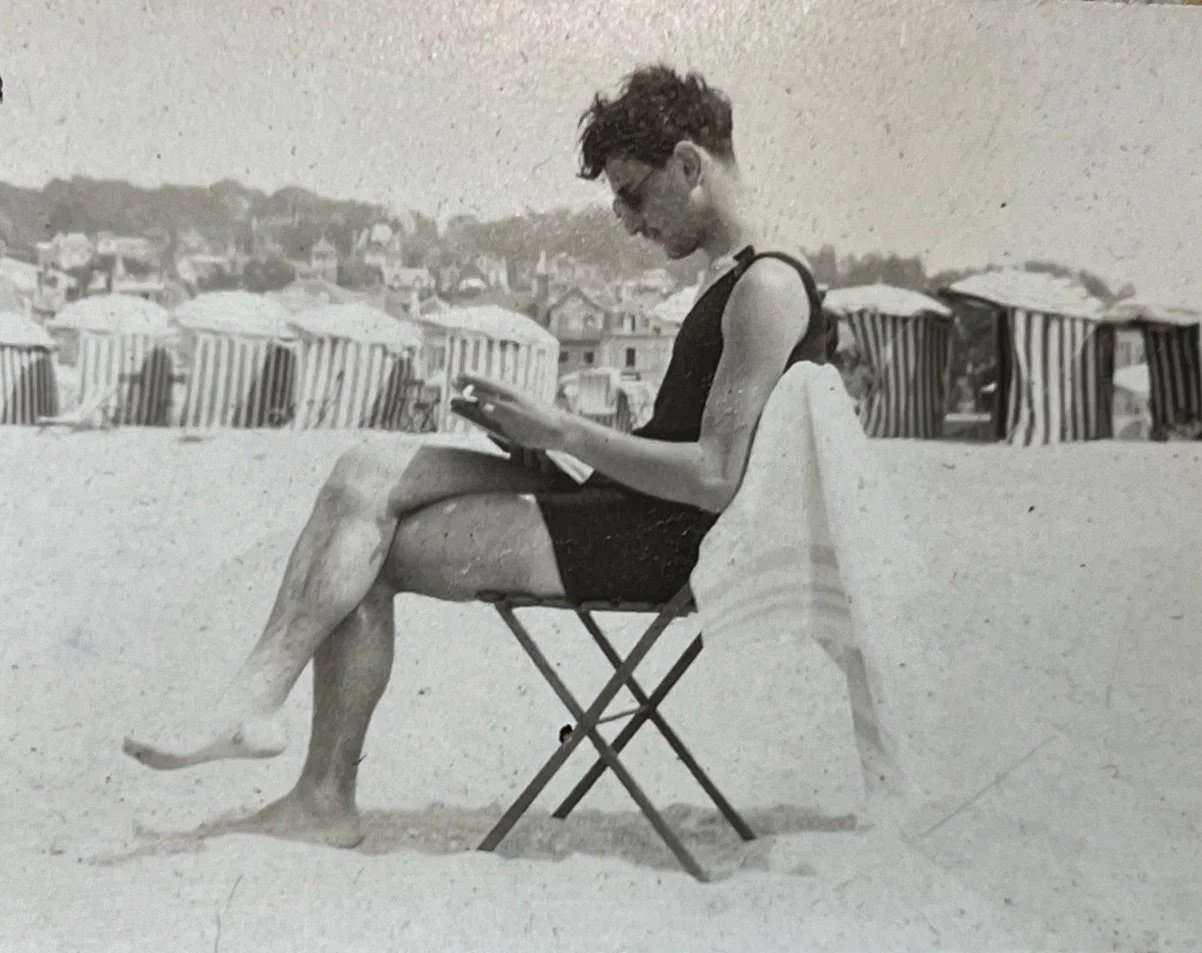
Family members remember his passion for creating—mostly painting, but writing, too—and his voracious appetite for reading, with interests running from art (art history, as well as current art journals), through history, politics, fiction, and poetry. When not in his studio, he would be found sitting in a favorite chair, surrounded by books. They also remember his prodigious linguistic skills and his gifts as a public speaker. In addition, it must be said that they remember his complete lack of interest in food! He could appreciate good food, of course, but mostly he ate because he needed energy to create and to interact with friends and family.
THE CIRCLE AROUND THEM
Who were the important people in their life during this period? Were there other artists, writers, friends, collaborators, or places that seem especially connected to their story?
A few words about Lawrence Lariar, mentioned above as his roommate. Larry (whom I remember as a child) went on to have a career as a cartoonist, cartoon editor, and mystery writer. Larry began life as Lawrence Rosenblum (I’m not sure of the exact name, but it’s something like this). In Paris, he began to use Larry R. as his signature, and then he changed it (I believe) to LaRiar, and finally to Lariar, and he became Larry Lariar! (This is my memory from long-ago conversations with my dad.) Anyway, there is an article about Larry that was published in 1949 or so, in which he described having a cartoon agency with two buddies (my father [identified as “Jack Arthur,” a New York teacher] and Adolph Schus). The article claimed that these three cartoonists would render drawings in any number of styles—on demand—and that they went to Paris together and did the same thing. How much of this is accurate, I do not know, but I know that my dad did have a couple of Schus’ pieces in his files and that Larry was a lifelong friend.
As I see it, my father had three or four groups of friends, and the membership in these groups did not necessarily overlap. First, there were friends from the world of Scouting (both when he was active as a camp director, and from when I became active in Scouting); then there were art world friends; then there were art education/teaching/school administration friends; finally, there were neighbors and people he met in other capacities. He had very meaningful—and sustained—relationships with individuals in each of these categories, but he could also work in more-or-less isolation for long periods of time, as he did when trying to juggle the demands of the “school world” with his own creative work.
WHAT SURVIVES
What material from their life and career has remained in the family: photographs, letters, drawings, sketchbooks, publications, stories, or objects? Is there one piece that feels especially meaningful to you?
We have a remarkable collection of my father’s art, probably a few hundred paintings and hundreds of drawings, sketches, studies, etc. We probably have close to 20 pieces in our apartment, and each of our two daughters and their families have similar numbers, or more, and my sister has a small collection of our father’s paintings. And now that three of our grandchildren have finished college and are out in “the world,” they each have a few of their great-grandfather’s paintings. Finally, because we have been reluctant to sell my dad’s works, my wife and I have given pieces to close friends. In addition to the pieces that are hanging, we have numerous others that are in storage, as well as several portfolios.
When I look at the corpus of my father’s work, I believe that I can see a throughline from his time in Paris and it revolves, quite literally, around his sense of line and ability to generate a figure or scene with a minimal “expenditure” of line. I think that I see this “creative draftsmanship” through the years in the various styles and media in which he worked. In terms of preferences, I am particularly partial to the watercolors that he did in period between 1949 and 1955, as they were lovely and skillful depictions of outdoor scenes—farms, lakes, mountains, the seacoast. These were representational pieces and became more abstract over the years. I also love his very detailed pen-and-ink and pencil drawings, as well has his cartoon-like figures. And among my favorites are the pieces that he did in the four years before his death – abstract figures, mostly faces, in watercolors and acrylics. My father believed that he was on to something new in this work, using color in ways in which he had previously used line. Finally, at the end of a day painting, he would use paint that was left over to create (very quickly) wonderful faces—mostly with his brushes but sometimes working only with a palette knife. I include these pieces in my listing of favorites.
THE PERSON YOU REMEMBER
What story about them has been passed down in your family that you think reveals something about who they really were?
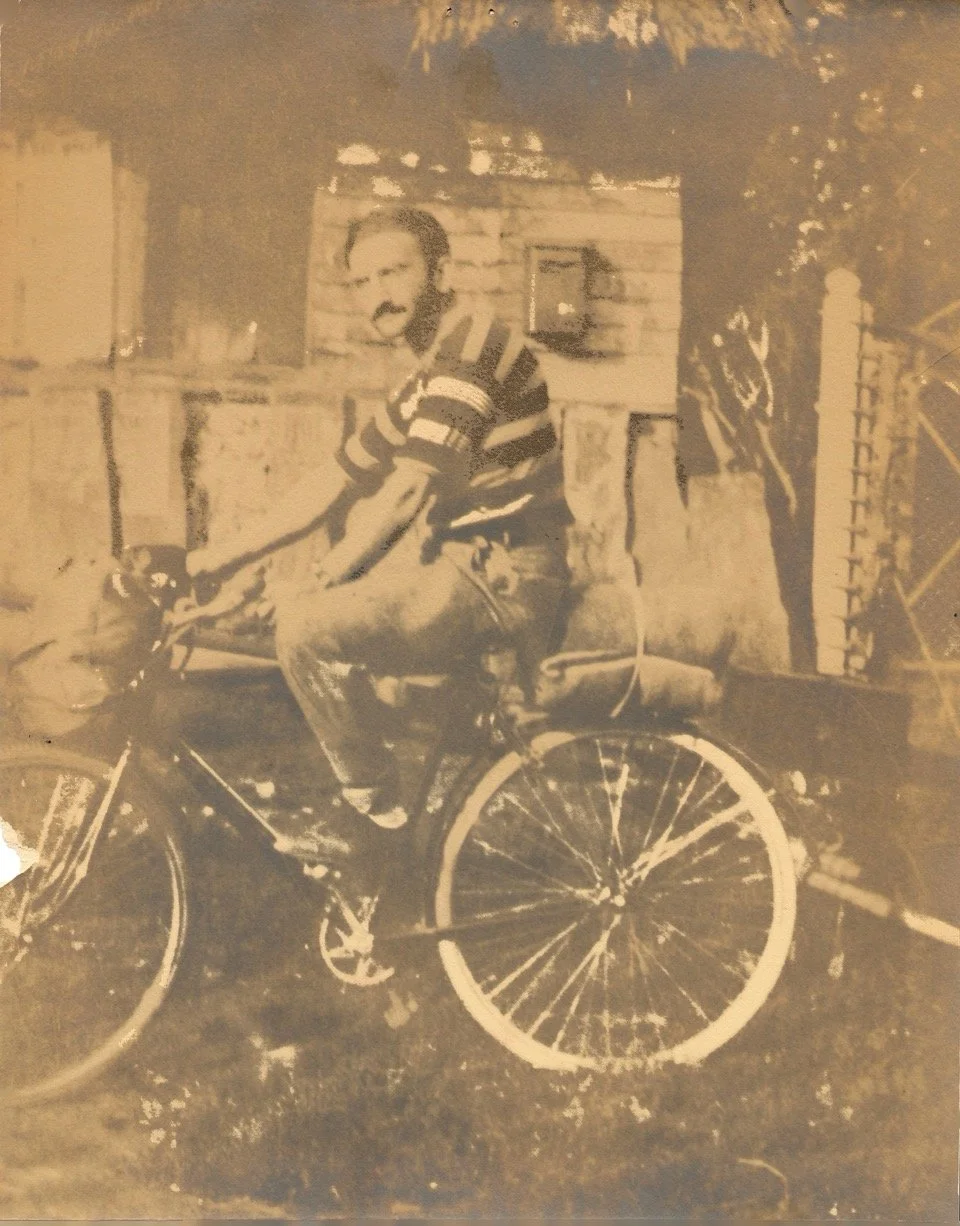
I have many memories of my father as a working artist and educator who was fully engaged with his family. He introduced me to the world of art, to the world of camping, hiking, and canoeing, to the world of serious scholarship, and to the importance of contributing to others and to the community. I grew up witnessing a stream of people who would come to the house, climb the stairs to my father’s attic studio, and seek his counsel. He believed in helping people whenever he could—no matter how busy he was—and was committed to what I call values that matter.
There are many stories—including those about his early work as a camp director and his later work as a school administrator supporting his teachers in and after the difficult “red-scare” McCarthy era in the 1950s—that I could tell. However, I would prefer to leave you with two examples of his wisdom, as reflected in conversations with my wife:
1) When she was a beginning teacher in New York, working in a very “difficult” section of the city, his advice to her was to remember that she could not move mountains but rather that she had to be content with moving molehills, and that to make a significant impact on one or two children each year would be a major accomplishment.
2) Another conversation revolved around reading. At one time, my wife was complaining about a book that she was reading; she didn’t like it but felt compelled to finish it. My father—who read everything and usually was immersed in two or three books at the same time—looked up and said, “Why should you finish it if it doesn’t “grab” you? There are millions of good books out there, and you should not waste time on something that doesn’t interest you!” My wife remembers and passes on these bits of wisdom—more than 50 years after these conversations.
WHAT SHOULD WE KNOW?
Is there something about their life or work that you feel has been forgotten, misunderstood, or deserves to be better known today?
My father’s parents were immigrants from Europe without resources. He grew up in impoverished environment, and he was the only one of his siblings to attend college. I believe that his talent in art and his involvement in the Boy Scouts (first as a scout and then as a leader), when combined with his intellectual gifts, were essential to getting him out of his environment and launched on a different trajectory from that of his siblings.
Also, I know that my father made many important contributions in his teaching and administrative work, and that he produced an enviable corpus of work as an artist. However, I’m certain that his own development as an artist must have suffered as he juggled “two masters,” and sometimes I wonder what he could have accomplished if he could have worked full time as an artist. I do know that when he retired from his school career, he had three easels going at the same time and he painted 12 hours a day! And the work that he produced in that time before his death was some of his best!
LAST CALL
If you can, leave us with a song they loved, listened to, played, danced to, or that your family associates with them. And if no such song survives, what song would you choose to accompany their story?
My father adored Edith Piaf’s singing! He also loved a song that was popular in the early 1950s that was sung by Eddie Fisher, “Oh my Papa.” This song that evoked many happy memories of his father.
As told to Patrick Dooley